The Last Drop Rises: Baking Neath's Winter Mornings with Local Ale
Winter in Neath has a smell of its own. Wet stone, woodsmoke, the yeasty breath of a pub kitchen warming up before service. This winter 2026, one small corner of that smell is drifting from the Bluebell kitchen to a baker a few streets away, and coming back as something you can slice, toast and butter. The last half-pint of a Welsh ale is being put to work in a malted winter loaf, and it is a very Neath sort of collaboration.
Why the Last Half-Pint Matters
Ale and bread have been neighbours for centuries. Before packets of dried yeast, bakers relied on barm, the foamy yeast captured from fermenting beer, to raise their dough. It was never a precise ingredient, but it was local, lively and free. The old breweries and bakehouses often stood close enough for a jug to be carried between them. In a valley town like Neath, where the working past and the pub are never far apart, that history feels less like a trend and more like common sense.
What does ale actually do for a loaf? It brings malt, and malt brings depth. A dark Welsh ale can carry notes of roasted barley, cocoa, dried fruit and coffee. Those flavours do not shout over the bread; they settle into the crust and the crumb like a good fire in a grate. The sugars left in the ale help the crust colour, and the yeast and enzymes can lend a gentle, savoury tang. You are not making a pint-flavoured novelty. You are making a loaf with a bit of backbone.
It matters which pint you use. A heavily hopped IPA can turn bitter in the bake. A dark mild, porter, stout or a smooth Welsh ale is kinder, especially if it has gone flat and reached room temperature. Never use the dregs of a glass. The half-pint should be clean, uncarbonated and saved before it has sat around. The pub kitchen has a phrase for it: the last drop, not the last dregs.
From Barrel to Bench: A Small Neath Collaboration
The arrangement is simple. The Bluebell kitchen sets aside the last half-pint from a cask, cools it and passes it to a nearby baker. The baker uses it in a straight dough or a levain, depending on the day. The loaf returns to the pub for breakfast and lunch, and sometimes for the sort of late-afternoon plate that sits happily between a walk and a pint.
It is not a grand industrial scheme. It is a few streets, a jug, a baker and a kitchen trying to waste less and taste more. But that is often how good food in Neath happens: quietly, between people who know each other, with no press release and a fair bit of washing up. The baker gets an ingredient with local character. The pub gets a loaf with a story. The customer gets toast.
For winter 2026, that feels like a proper exchange. The valley is full of good ale, and the town is full of people who would rather buy a loaf from someone they can wave at than from a shelf that has never seen a Neath morning.
What the Loaf Tastes Like
Expect a crust that crackles when you press it and gives a good shard when cut. Inside, the crumb should be soft but not cakey, with a faint malt sweetness and a savoury finish. It is excellent fresh, but it is at its best a day old and toasted. The ale flavour deepens overnight, and the crust takes on a nutty quality under a hot grill.
This is not a sourdough lecture. If you bake with commercial yeast, the loaf will still carry the ale. If you keep a starter, feed it with a splash of the same beer and you will get a more pronounced tang. Either way, let the dough take its time. A slow prove in a cool kitchen suits a winter loaf. So does a thick slice, a generous spreading of butter and a few minutes of patience while the kettle boils.
A Bluebell Plate for a Winter Morning
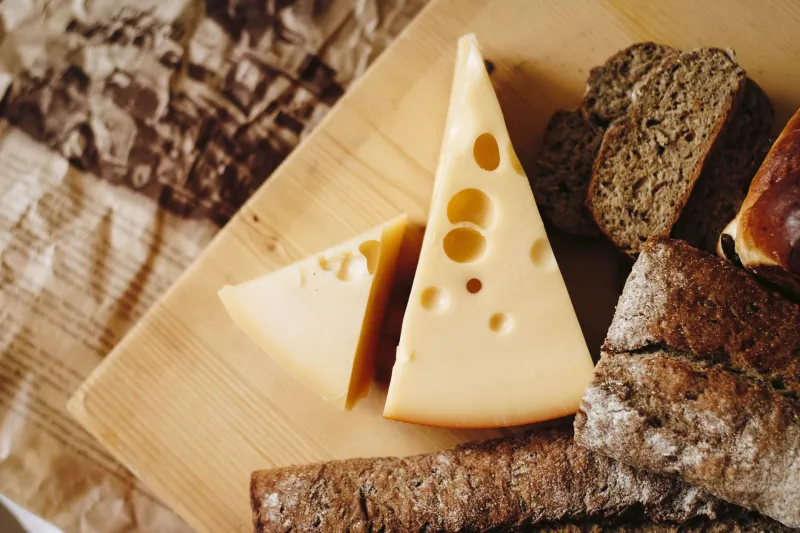
At the Bluebell, the natural serving is a thick slice of the ale loaf toasted until the edges darken, then topped or accompanied by mature Welsh cheddar and a spoonful of chutney. The cheddar should be sharp enough to cut through the malt, and the chutney should be dark and sticky, perhaps apple or onion, with a little vinegar bite. Add a few pickled shallots if you like. Keep the butter nearby.
Beside it, you have a choice. A half of dark ale makes a fine late breakfast for anyone who has already been out in the valley. A black coffee is just as respectable, especially before noon. The point is not to build a rule around it. The point is to give the loaf a plate that feels like Neath: generous, unfussy and ready for company.
Baking It at Home: A Simple Method
You do not need a pub cellar to try this. A clean, flat half-pint of dark Welsh ale is enough. This makes one loaf.
- 400g strong white bread flour
- 100g wholemeal flour
- 7g dried yeast, or 100g active sourdough starter
- 8g fine salt
- 250ml flat dark Welsh ale, at room temperature
- About 100ml water, added gradually
- Optional: 1 tbsp fresh ale barm, if you can get it from a friendly brewer
Mix the flours and salt in a large bowl. Add the yeast or starter, then pour in the ale. Bring it together with your hand or a wooden spoon. Add water a splash at a time until you have a soft, slightly sticky dough. If using barm, stir it into the ale first. Leave the covered bowl for 20 minutes, then knead for 8 to 10 minutes until smooth. Prove in a covered bowl until doubled in size, roughly 1 to 1.5 hours in a warm kitchen. Shape into a round or a tin loaf, prove for another 45 to 60 minutes, then bake at 220C fan 200C gas 7 for 35 to 40 minutes. The loaf should sound hollow underneath. Cool it properly before slicing, however hard that is.
If the dough feels stiff, add water. If it feels slack, give it another fold or two. Bread is not a tax return. It forgives.
The Morning After the Night Before
The half-pint loaf is a small thing, but it says something about how a pub kitchen can belong to its town. It turns a leftover into a breakfast. It gives a baker a reason to walk down the street. It puts a plate on the bar that tastes of malt, cheddar and winter. And it proves that the last drop is often the one worth saving.